
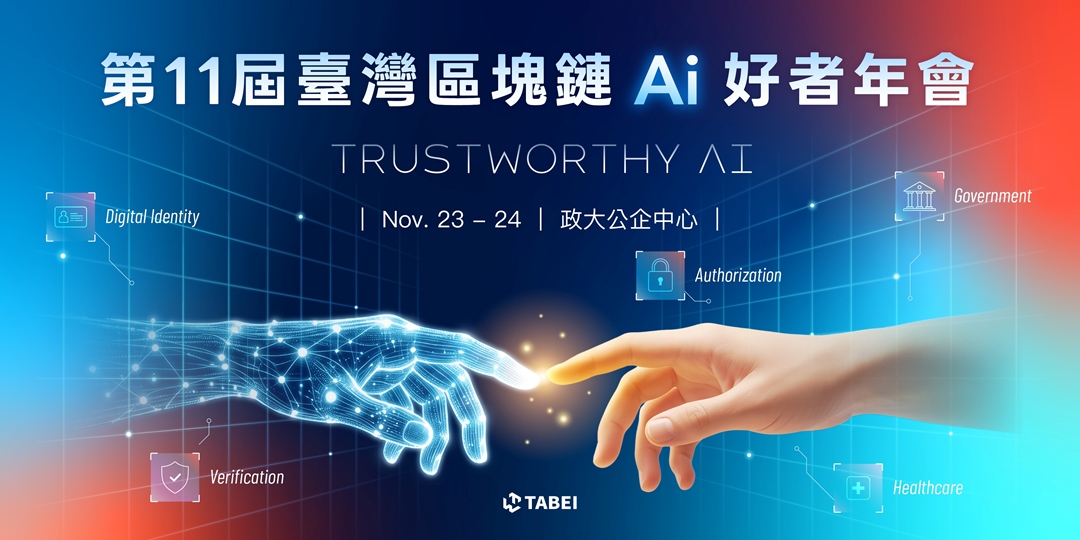

臺灣區塊鏈愛好者協會謹訂於 2026 年 11 月 23-24 日 假政大公企中心舉辦第 11 屆年會。以 Trustworthy AI 為核心主題。
11 月 23 日下午舉辦【信任日 Trust Day】
我們以【信任日】為全年行動收官。今年的研究從 6 月的專家閉門座談開始,先建立研究與技術框架。7 月舉辦兩場產業座談,盤點八大場域的痛點。8 月再以可信 AI 黑客松做 POC 實作驗證。這一路累積的成果,將在這個下午完整呈現。
信任日的核心是發表研究成果白皮書,內容涵蓋六個部分:問題與缺口、國際對標、痛點×解方矩陣、DPI 與信任架構、實作驗證,以及八項政策建議。白皮書將作為政府與產業後續推動跨部會社會實驗、監理沙盒與示範場域的依據。
我們也邀請全球法人識別碼基金會(GLEIF)與 FIDO 聯盟來台聯名發表,讓臺灣的數位信任基礎建設與國際標準接軌。黑客松團隊也將同台見證,展示可信 AI 從概念走向落地的可能。
信任不只是技術,更是未來 AI 經濟的共同基礎。
11 月 24 日整天舉辦【機構日 Institution Day】
本日以「穩定幣、託管、擔保品、RWA」四個題目貫穿全日。這四個題目是同一條價值鏈上的四個環節:穩定幣是鏈上的結算貨幣,託管決定資產由誰保管、責任如何劃分,擔保品把數位資產接進既有的授信體系,RWA 則把傳統有價證券搬到鏈上發行與流通。四個環節接起來,才能帶動飛輪,產生效益。
虛擬資產服務法即將施行,銀行公會的託管自律規範已經定稿,監理框架大致成形,金融機構面對的已是執行層面的問題:內規要怎麼寫才通得過稽核,擔保品要用什麼方法估值、折扣率怎麼訂。台灣股市迎來有史以來的榮景,如何讓更多海外投資人買到台灣評等優良的資產,跨境發行的法律結構與清算怎麼設計,對台灣亞洲資產管理中心的引資有重大影響。鏈上流動性從哪裡來、誰來兌換,則由穩定幣發行商及國際通匯行共同探討。
因此機構日採六個場次的設計,把亞洲各國本幣穩定幣的發行機構、承作託管與授信業務的外資與本國銀行、跨境發行有價證券的資產管理與證券業者,以及 RWA 網路節點治理與營運規則的設計者,請到同一個會場。上午談貨幣層與託管層,下午談授信、跨境發行與流動性,最後收在節點治理,順序依價值鏈由下而上排列。我們希望與會者帶走的不是趨勢判斷,而是可以直接拿回機構內部討論的做法與案例,並在交流之中找到台灣數位資產市場下一階段的可行路徑。
活動議程將於後續陸續公開,請持續關注本協會最新資訊
Taiwan Blockchain Summit (TBS) 2026
The Taiwan Association for Blockchain Ecosystem Innovation (TABEI) will hold the 11th Taiwan Blockchain Summit on November 23–24, 2026, at the NCCU Public Affairs Center in Taipei. This year's theme is Trustworthy AI.
Trust Day | Afternoon, November 23
Trust Day is the final event of this year's program. Our research began in June with closed-door expert roundtables that set the research and technical framework. In July, two industry forums mapped pain points across eight sectors. In August, the Trustworthy AI Hackathon tested the ideas through proof-of-concept builds. Trust Day presents everything that work has produced.
The main event is the release of our research white paper, which has six parts:
- Problems and gaps
- International benchmarking
- A pain-point × solution matrix
- Digital public infrastructure (DPI) and trust architecture
- Implementation validation
- Eight policy recommendations
Government and industry can use the white paper as a basis for cross-ministry social experiments, regulatory sandboxes and pilot sites.
We have also invited the Global Legal Entity Identifier Foundation (GLEIF) and the FIDO Alliance to Taiwan to co-present the white paper. Their participation links Taiwan's digital trust infrastructure to international standards. Hackathon teams will join them on stage to show how trustworthy AI can move from concept to real-world use.
Trust is more than technology. It is the shared foundation of the future AI economy.
Institution Day | Full Day, November 24
Institution Day covers four topics: stablecoins, custody, collateral and RWA (real-world assets). They are four links in one value chain:
- Stablecoins are the settlement currency on-chain.
- Custody decides who holds the assets and who is responsible for what.
- Collateral brings digital assets into existing credit systems.
- RWA puts traditional securities on-chain for issuance and trading.
The benefits come when all four links connect and the flywheel starts turning.
The Virtual Asset Service Act will soon take effect, and the Bankers Association's custody self-regulatory rules are final. With the regulatory framework largely in place, financial institutions now face practical questions: how to write internal policies that pass audit, how to value collateral and how to set haircuts.
Taiwan's stock market is at an all-time high. That raises further questions: how more overseas investors can access Taiwan's highly rated assets, and how to design the legal structure and settlement for cross-border issuance. The answers will matter a great deal for drawing capital to Taiwan's Asian Asset Management Center initiative. Stablecoin issuers and international correspondent banks will also discuss where on-chain liquidity comes from and who provides conversion.
Institution Day has six sessions. They bring together:
- Issuers of local-currency stablecoins from across Asia
- Foreign and domestic banks that provide custody and lending
- Asset managers and securities firms that issue securities across borders
- Designers of node governance and operating rules for RWA networks
The morning covers the currency and custody layers. The afternoon moves to lending, cross-border issuance and liquidity, and the day ends with node governance. The sessions move up the value chain from the bottom layer.
We want attendees to leave with more than trend forecasts: practical approaches and case studies they can take back for discussion inside their own institutions. We also hope the conversations here help chart the next stage for Taiwan's digital asset market.
The full agenda will be announced soon. Please follow TABEI for the latest updates.