微光 2026 秋冬古樂講座系列 古樂大師講座場
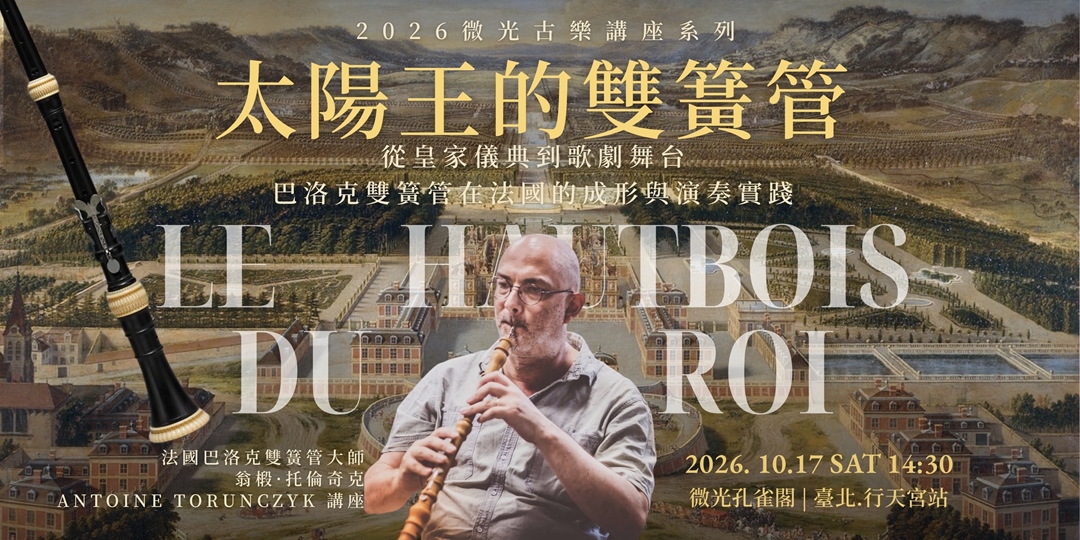
《太陽王的雙簧管 Le Hautbois du Roi》
從皇家儀典到歌劇舞台:巴洛克雙簧管在法國的成形與演奏實踐
*講座同步翻譯
● 講座內容
當太陽王路易十四將法國宮廷打造成全歐洲矚目的文化中心,一種嶄新的聲音也正在17世紀的法國逐漸成形—巴洛克雙簧管 (Hautbois),意指:「高聲之木」或「響亮的木管」。
它出現在國王的加冕、遊行與皇家儀典,之後更走進凡爾賽宮廷樂長—盧利的宮廷芭蕾與歌劇舞台,並在數十年間傳遍歐洲,成為巴洛克樂團中最重要的木管樂器之一。
每一場交響樂開始以前,最先響起的往往是現代雙簧管的一個 A。
那個帶著鮮明鼻音、明亮而穿透,甚至偶爾被戲稱有些像「鴨鳴」的聲音,今天肩負著為整個管弦樂團定音的任務,然而350年前,我們所熟悉的這種雙簧管,才剛在路易十四時代的法國逐漸成形。
歐洲雙簧樂器的歷史最早起源於—文藝復興蕭姆管(Shawm)以強烈、穿透力極高的聲響活躍於城市樂隊、舞蹈與室外遊行慶典。
到了17世紀中葉,正值太陽王路易十四逐步建立法國宮廷音樂風格的年代,為了追求更精緻、柔和而富有層次的聲音,演奏家與樂器製作者也開始重新塑造這類雙簧樂器。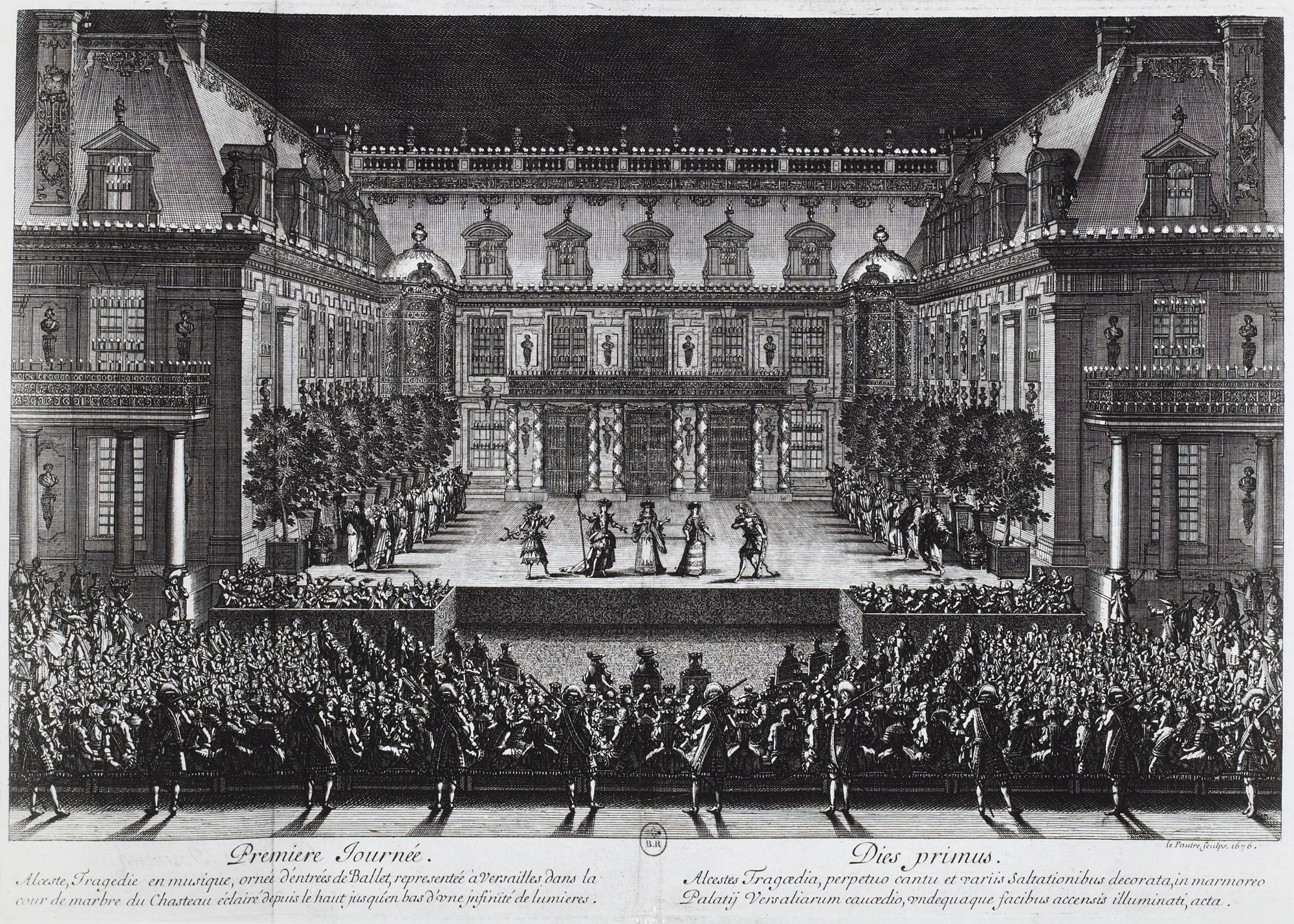
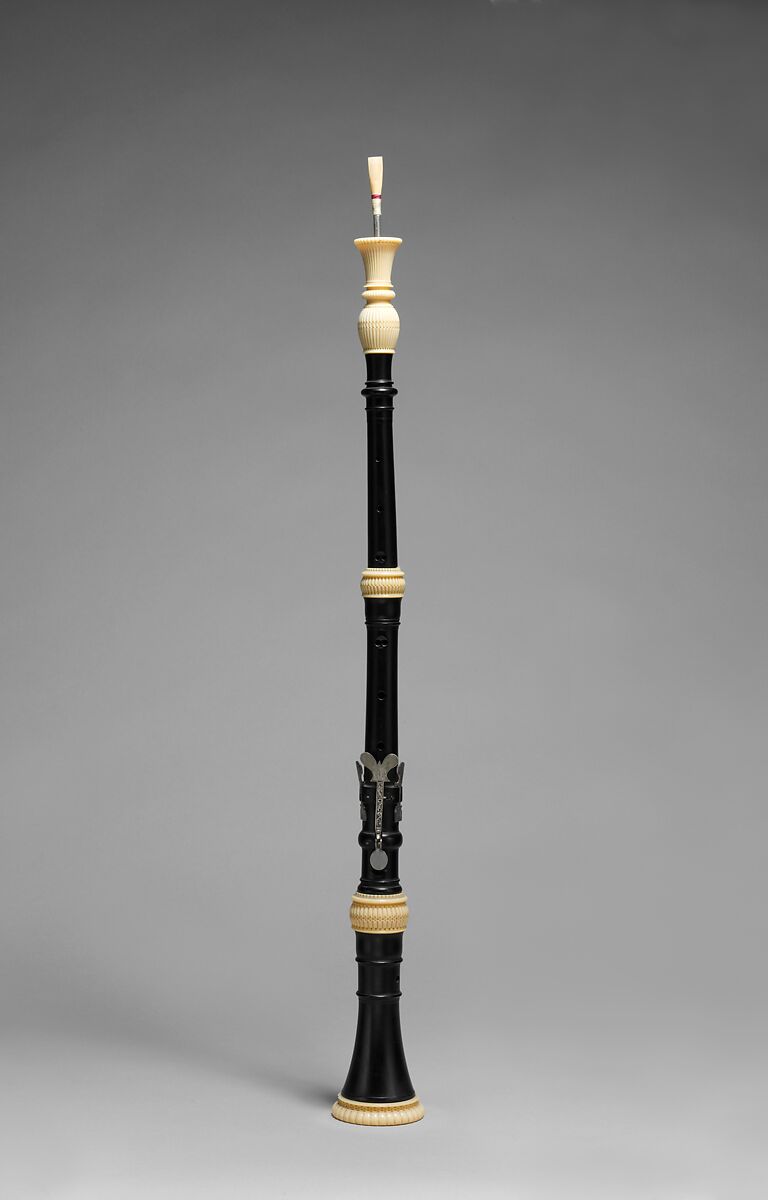
《現代「三節式」雙簧管的前身、法國巴洛克最重要的木管樂器—巴洛克雙簧管》
約1640至1670年間,他們讓管徑、音孔與簧片陸續改變,原先多為一體成形的蕭姆管管身發展為上節、中節與喇叭口的「三節式結構」,並加入少量的按鍵,這些改變逐漸塑造出我們今天所稱的—巴洛克雙簧管 (Hautbois),
相較於蕭姆管強烈而外放的聲響,巴洛克雙簧管變得較柔和、深沉,也更能融入不同樂器的室內樂之中。
巴洛克雙簧管的成形正好遇上路易十四建立龐大王室音樂制度的年代。雙簧管廣泛出現在皇家馬廄音樂(Musique de l’Écurie)、加冕、王室進城、遊行與宮廷慶典之中,也形成著名的 「國王的十二大雙簧管」Douze Grands Hautbois du Roi 傳統。
不同音域大小的雙簧樂器共同構成多聲部合奏,並與「國王的二十四把小提琴」等王室樂團共同演出,成為法國宮廷引以為傲的榮耀編制。
到了宮廷樂長—盧利(Jean-Baptiste Lully)的時代,巴洛克雙簧管和低音管逐漸從皇家儀典進入宮廷芭蕾、宮廷娛樂與歌劇,並和弦樂、及聲樂家共築嶄新的巴洛克管弦樂團色彩。
17世紀末以後,這種樂器迅速傳至英國、日耳曼地區、尼德蘭低地國與義大利,甚至到了巴赫、韓德爾與泰勒曼的時代,巴洛克雙簧管早已成為當時歐洲樂團與室內樂中最不可缺少的聲音,而這樣「三節式」的雙簧管,持續隨著時代和音樂風格演變直至今天。
講座在法國巴洛克皇室的雙簧管文化之外,將進一步探討17、18世紀的樂譜與演奏文獻,包含巴洛克雙簧管的簧片、指法、運舌、裝飾、音色與法國巴洛克的演奏風格,此次講座將由法國巴洛克雙簧管大師—安托萬・托倫奇克(Antoine Torunczyk)親自主講,透過歷史樂器、簧片、文獻與現場演奏示範,帶領觀眾從巴洛克雙簧管的構造與聲音,走進太陽王時代的皇家儀典、歌劇舞台與法國巴洛克音樂文化。
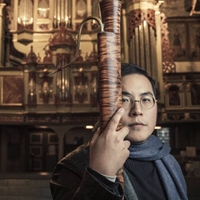
● 講者|法國巴洛克雙簧管家/巴黎高等音樂院、巴塞爾古樂學院歷史雙簧管教授—翁椴・托倫奇克 Antoine Torunczyk
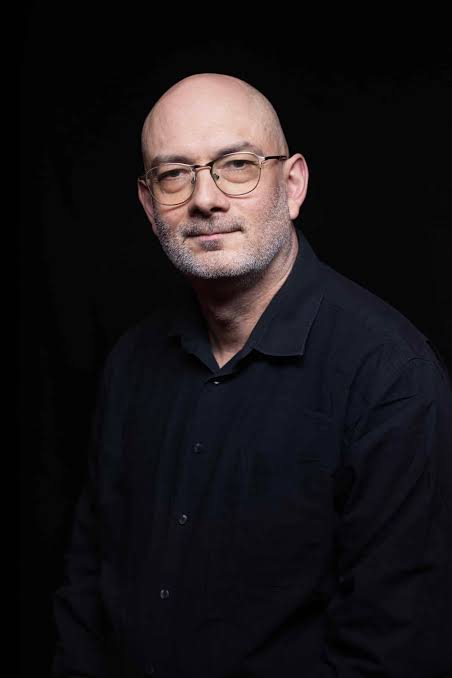
法國歷史雙簧管演奏家—翁椴・托倫奇克(Antoine Torunczyk)長年活躍於歐洲古樂演奏、研究與教育領域。早年就讀里昂國立高等音樂院,之後赴阿姆斯特丹師事義大利巴洛克雙簧管名家阿爾弗雷多・貝爾納迪尼(Alfredo Bernardini),並於2000年獲德國 Halle 巴洛克雙簧管國際競賽首獎。
托倫奇克曾長期擔任阿姆斯特丹巴洛克樂團(Amsterdam Baroque Orchestra) 與哥本哈根巴洛克樂團 (Concerto Copenhagen)首席雙簧管,並與歐洲重要歷史樂器樂團合作,演出與錄音曲目涵蓋巴赫、韓德爾、法國巴洛克等17、18世紀作品。
在教學領域,他於歐洲重要古樂系任教,曾任教於荷蘭海牙皇家音樂院(Royal Conservatoire The Hague),現任教於巴黎國立高等音樂舞蹈學院(Conservatoire national supérieur de musique et de danse de Paris),並於古樂重鎮—瑞士巴塞爾古樂學院(Schola Cantorum Basiliensis)教授歷史雙簧管。
他亦建立 The Hautboy Companion,長期整理早期雙簧管曲目、歷史教材、原始文獻與演奏資料,將樂器研究直接帶入當代歷史演奏與教學之中。
此次來臺,托倫奇克將以演奏者、教育者與研究者的視角,親自示範巴洛克雙簧管的聲音與演奏方法,並由樂器構造一路談到路易十四的王室音樂制度、法國歌劇及今日的歷史演奏實踐。對臺灣觀眾而言,這也是難得能直接由歐洲第一線歷史雙簧管專家,實際進入這段巴洛克雙簧樂器史與法國巴洛克音樂文化的機會。
______________________________________________________
English
The Gleam 2026 Autumn–Winter Early Music Lecture Series
Le Hautbois du Roi
From Royal Ceremony to the Operatic Stage: The Formation and Performance Practice of the Baroque Oboe in France
● Lecture Introduction
As Louis XIV, the Sun King, transformed the French court into one of Europe’s most influential cultural centres, a new sound was taking shape in seventeenth-century France: the Baroque oboe, or hautbois, a name that can be understood literally as “high-sounding wood” or “a resonant wooden instrument.”
It was heard at coronations, royal entries, processions and court ceremonies, and soon found its way onto the stages of court ballet and opera under Louis XIV’s celebrated music director, Jean-Baptiste Lully. Within only a few decades, the instrument spread across Europe and became one of the most important woodwind voices of the Baroque orchestra.
The European double-reed tradition had already flourished long before then. During the Renaissance, the shawm was prized for its powerful, highly projecting sound and was widely used by civic wind bands, for dancing, and in outdoor processions and festivities.
By the mid-seventeenth century, as the musical style of Louis XIV’s court was developing, musicians and instrument makers began reshaping these double-reed instruments in pursuit of a more refined, supple and nuanced sound.
The Baroque Oboe: the Three-Piece Instrument that Prefigured the Modern Oboe, and One of the Most Important Woodwinds of French Baroque Music
Between approximately 1640 and 1670, changes were made to the bore, finger holes and reed. The largely one-piece body of the shawm gradually gave way to a three-piece construction consisting of an upper joint, lower joint and bell, with a small number of keys added. Together, these developments gradually produced the instrument we now recognise as the Baroque oboe (hautbois).
Compared with the powerful and extroverted voice of the shawm, the Baroque oboe offered a softer, darker and more flexible sound, allowing it to blend more readily with other instruments in chamber and orchestral settings.
Its emergence coincided with Louis XIV’s creation of an elaborate royal musical establishment. Oboes were heard in the Musique de l’Écurie, at coronations, royal entries, processions and court festivities. This environment also gave rise to the celebrated tradition of the Douze Grands Hautbois du Roi “The King’s Twelve Great Oboes.”
Double-reed instruments of different sizes and registers formed complete polyphonic ensembles and also performed alongside royal groups such as the Vingt-quatre Violons du Roi “The King’s Twenty-Four Violins.” These ensembles became a prestigious and highly distinctive part of French court music.
During the age of Jean-Baptiste Lully, the Baroque oboe and bassoon increasingly moved from royal ceremony into court ballet, theatrical entertainments and opera. Together with strings and singers, they helped create the new orchestral colours that became characteristic of French Baroque music.
By the end of the seventeenth century, the instrument had rapidly spread to England, the German-speaking lands, the Low Countries and Italy. By the time of Bach, Handel and Telemann, the Baroque oboe had become one of the indispensable voices of European orchestral and chamber music. The essential three-piece construction established during this period continued to evolve with changing musical styles and remains fundamental to the oboe today.
Beyond the culture of double-reed instruments at the French royal court, this lecture will explore seventeenth- and eighteenth-century scores and historical performance sources, including reeds, fingering, articulation, ornamentation, tone production and French Baroque performance style.
French Baroque oboe specialist Antoine Torunczyk will lead the lecture himself, using historical instruments, reeds, documentary sources and live demonstrations. Through the construction and sound of the Baroque oboe, audiences will be invited into the world of royal ceremony, the operatic stage, and the musical culture of France under the Sun King.