
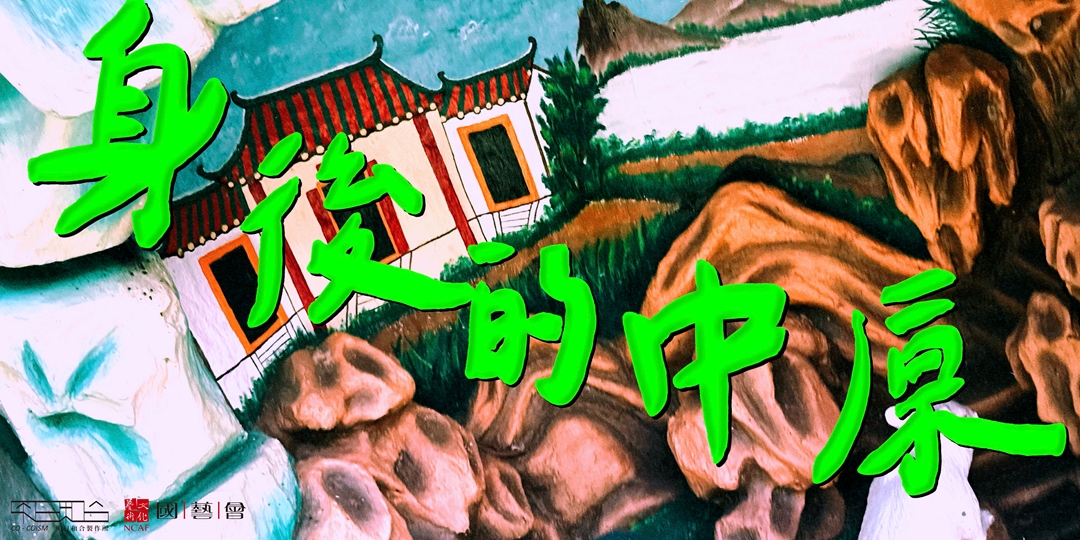

一個華人死了之後,他的靈魂會回去哪裡?
起初,我好奇東南亞的華人如何在非華人的起源地,保留了豐富的華人文化,而這些文化也同時結合了當地的族群、語言、習俗等,建構出了某種(以台灣人為主體而言)既熟悉又陌生的華人文化樣貌;在這樣的情境中,我企圖將體驗「虛擬實境Virtual Reality」時,頭顯內的虛擬影像與現場環境在視覺與體感上產生的各種錯置,與在東南亞的華人文化擺放在一起,東南亞華人在當地建構出的華人文化,是否也是一種「虛擬實境」?帶著這樣的好奇,我與團隊夥伴前往了印尼山口洋、新加坡、馬來西亞檳城(途經麻六甲、怡保)等城市進行田野調查。
在新加坡田調一次偶然的聚會中,我與一位當地華人朋友聊天。席間,他提到自己的父親與叔叔兩兄弟一起從福建到新加坡打拼,叔叔過世前有囑咐後人要將骨灰帶回福建入祖祠,而他的父親沒有特別交代,這位朋友及其家屬便決定將他安葬在新加坡。人在死去之後,漂泊的靈魂會回到最後的棲身之地嗎?他叔叔生前最後和家人一起待著的家,終究只是一處臨時居所?
有家是不夠的,家還得要在那個「中原」
以我的家族為例,我的曾祖父約在1900年前後先抵達了新加坡,再至新山、古晉,最終落腳西婆羅洲的山口洋,與當地土生華人(Peranakan Chinese,指早期華人移民與馬來群島各族群通婚的後代)——我的曾祖母結婚。十八世紀下半葉,來自廣東的客家人便在西婆羅洲建立起蘭芳公司(華人採礦組織,亦有人稱之為「蘭芳共和國」),華人在那座島嶼上已經生活超過了數百年,與當地人一起經歷荷蘭殖民時期,以及二戰期間日軍的佔領與屠殺;然而,與島上各個民族共同走過的過往,並不代表印尼在以現代國家的姿態獨立後,華人即成為這個千島之國中的一份子,因為自身的認同不等於他者對你的認同,在那塊土地上的日子過得再久,也不意味著他們是正統的主人。
或許,有家人在的地方就是家,但對某些世代、地區的華人移民而言,這個家還得在那個「中原」。中原是一種歸屬,是餐盤上的食物,是祭祖的儀式,是因為思念故鄉轉化而出的一連串行動,是總在身後幽微顫動的不安全感。時間久了,飄移成了一種穩定的狀態,一代傳過一代。正當要忘記自己是移民時,歷史上總會找到一些節點,提醒他們在原鄉是最底層的人,是因為沒米可吃才到別人的土地上種稻。他們既(不)屬於當地也(不)屬於家鄉,除了心中虛構的那個中原。
【藝術家簡介】
張剛華Budi Kang-Hua CHANG
1987年生於印尼山口洋市,成長於台灣,現為獨立藝術家、「明日和合製作所」共同創辦人。創作聚焦家族橫跨中國、馬來西亞、新加坡、印尼與台灣的遷徙軌跡。從自身的移民身份出發,將身體與生命經驗視為活檔案,游移於自傳與虛構敘事之間,將遷徙與社會流動的複雜現實,轉化為展演相遇。
他對華人離散經驗的探問,體現於對多樣展演媒介的運用。其形式包含將身體作為田調工具(如洗頭、按摩的長期計畫),以及將虛擬影像疊合於現實空間的混合實境作品。他將移民在不同文化、地域間體驗到的斷裂,轉化為藝術實踐,關注認同在群體間的流動與往返,映照出一個永遠處於過境狀態的自我。
2026年取得國立臺北藝術大學藝術跨域研究所碩士,其作品曾獲2025年臺北美術獎優選,並於2018年參與ADAM亞當計畫藝術家實驗室。
【體驗長度】
全長約 50~60 分鐘(含穿戴設備、展覽觀賞)
【注意事項】
- 本展覽為免費活動,需事先索票登記方可入場,每場次僅供 1 人觀賞。
- 本次展覽含VR體驗段落,為維護最佳體驗品質與完整性,遲到者將無法入場,敬請準時抵達。
- 為求最佳觀影體驗與舒適度,建議戴眼鏡者配戴隱形眼鏡。頭戴式裝置雖可供一般尺寸眼鏡者,但為避免少數狀況下,使用者鏡框過大而無法順利體驗,或因穿戴頭顯導致眼鏡受損。
- 少數人在使用頭顯設備時,可能會產生頭暈、噁心症狀,若您對自身的頭顯耐受性有疑慮,請務必徵詢醫師等專業建議,再決定是否參與體驗。
- 因場次數量有限,每人僅限報名一次。 若有同一人重複報名的狀況,主辦單位將從後台取消票券登記,敬請見諒。
- 主辦單位保有調整與變更活動之權利。 若就活動有任何問題,請以 Email 聯繫吳先生 poshanwus [@] gmail.com。
【團隊名單】
藝術家|張剛華
VR 內容製作與技術統籌|黃偉軒
VR 美術視覺與展場設計|陳嘉微
配樂與 VR 聲音設計|鄭則綸
燈光執行|簡芳瑜
製作統籌|吳伯山
文化調研顧問|盧明威
製作單位|明日和合製作所
多人體驗系統技術統籌 |C-LAB 未來視覺實驗室
系統開發工程師|楊泓軒 Snow Yang
合作單位|臺灣當代文化實驗場、C- LAB 未來視覺實驗室
贊助單位|財團法人國家文化藝術基金會
特別感謝|數位藝術基金會
-
-
從「不在上海的上海髮廊」到海外華人「身後的中原」—混合實境展演創作分享會
時間|2026.07.10 (五) 19:00
地點|臺灣當代文化實驗場 共享吧
>>>>>>>> English Below <<<<<<<
Where does the soul of a Chinese person return to after death?
Initially, I was curious about how Southeast Asian Chinese managed to preserve a rich Chinese culture in a place outside their cultural origin. These cultures have simultaneously blended with local ethnic groups, languages, and customs, constructing a Chinese cultural landscape that is both familiar and foreign (especially from a Taiwanese perspective). In this context, I attempted to juxtapose the visual and somatic dislocations experienced in Virtual Reality (VR)—the disconnect between the virtual images inside the headset and the actual physical environment—with the overseas Chinese culture in Southeast Asia. Is the culture constructed by Southeast Asian Chinese in their local contexts also a form of "virtual reality"? Driven by this curiosity, my team and I traveled to cities such as Singkawang in Indonesia, Singapore, and Penang in Malaysia (passing through Malacca and Ipoh) to conduct fieldwork.
During a serendipitous gathering while doing fieldwork in Singapore, I chatted with a local Chinese friend. He mentioned that his father and uncle, two brothers, had migrated together from Fujian to Singapore to make a living. Before passing away, his uncle instructed his descendants to bring his ashes back to Fujian to be placed in the ancestral shrine. His father, however, left no specific instructions, so my friend and his family decided to bury him in Singapore. After death, does a wandering soul return to its final resting place? Was the home where his uncle spent his final days with his family merely a temporary dwelling after all?
Having a Home is Not Enough: It Must Exist in "Zhongyuan"
Take my own family as an example: around 1900, my great-grandfather arrived first in Singapore, then traveled to Johor Bahru and Kuching, eventually settling in Singkawang, West Borneo. There, he married my great-grandmother, a local Peranakan Chinese (descendants of early Chinese immigrants who intermarried with various ethnic groups of the Malay Archipelago). In the second half of the 18th century, Hakkas from Guangdong established the Lanfang Kongsi (a Chinese mining organization, also referred to by some as the "Lanfang Republic") in West Borneo. Chinese people have lived on that island for centuries, experiencing the Dutch colonial period and the Japanese occupation and massacres during World War II alongside the locals. However, having shared these historical experiences with the island's various ethnic groups did not mean that Chinese people automatically became a part of this archipelago nation once Indonesia gained independence as a modern nation. Self-identity does not guarantee external recognition. No matter how long they have lived on that land, it does not mean they are its rightful heirs.
Perhaps home is wherever one's family is. Yet, for certain generations and regional groups of Chinese immigrants, this home must be situated in that "Zhongyuan." Zhongyuan is a sense of belonging; it is the food on the plate, the rituals of ancestral worship, and a series of actions born from a yearning for the homeland. It is the subtle insecurity that constantly quivers behind them. Over time, drifting has become a stable state, passed down from generation to generation. Just when they are about to forget that they are immigrants, history always reminds them with temporal coordinates, suggesting that they were the subalterns in their homeland, and that they only went to grow rice on someone else's land because they had no rice to eat where they were from. They simultaneously belong (and do not belong) to their adopted land and their ancestral home, with nothing—and everything—but the "Zhongyuan" lingering behind their backs.
【About the Artist】
Budi Kang-Hua CHANG is a performance artist and co-founder of the Taipei-based collective Co-Coism. Born in Singkawang, Indonesia, and educated in Taiwan, Chang deeply roots his trans-disciplinary practice in his family’s migration paths across China, Malaysia, Singapore, Indonesia, and Taiwan. In his practice, Chang positions his own body and lived experience as a living archive. Navigating the ambiguous space between the autobiographical and the autofictional, he translates the complex realities of immigration, physical displacement, and social mobility into tangible theatrical encounters. This approach is realized through intimate, participatory performances, where tactile rituals like shampooing or massaging serve as mediums to unpack inherited memories. Chang’s exploration of migration and diasporic Chinese identity is articulated through a wide spectrum of performance media. For him, the profound sense of dislocation between immigrant histories and local cultures actively dictates his choice of medium. By adapting his aesthetic strategies to these very frictions, he transforms the stage into an active site of negotiation, reflecting a self that is perpetually in transit. Chang's artistic contributions have been recognized with an Honorable Mention at the 2025 Taipei Art Awards, and he is an alumnus of the 2018 ADAM Artist Lab at the Taipei Performing Arts Center.
【Duration】
Approximately 50~60 minutes (includes time to put on VR headsets and exhibition viewing)
【Notice】
- This is a free exhibition. Advance ticket registration is required for admission, and each ticket admits only one person.
- Please arrive 5 minutes before the appointed session.
- For the best experience, latecomers will not be admitted. Please arrive on time.
- For optimal viewing comfort and overall experience, we highly recommend wearing contact lenses. While our VR headsets accommodate most standard-sized eyewear, oversized frames may prevent a proper fit or risk being damaged.
- Due to the limited number of sessions, registration is strictly limited to one entry per person. In the case of duplicate registrations by the same individual, the organizer will cancel the ticket bookings via our backend system. Thank you for your understanding.
- The organizer reserves the right to modify or change the event.
- For any inquiries regarding the event, please contact Mr. Wu via email at poshanwus [@] gmail.com.
【Credits Lists】
Artist|Budi Kang-Hua CHANG
VR Content Production & Technical Director|HUANG Wei-Hsuan
VR Art Direction & Exhibition Design|Jaivi CHEN
Music & VR Sound Design|CHENG Tse-Lun
Lighting Execution|CHIEN Fang-Yu
Production Manager|WU Po-Shan
Cultural Research Consultant|Sebastian Susilo
Technical Lead for Multi-user Interactive System|C-LAB Future Vision Lab
System Developer|楊泓軒
Collaborative Partners|Taiwan Contemporary Culture Lab (C-LAB), C-LAB Future Vision Lab
This project is supported by National Culture and Arts Foundation (NCAF)
Special Thanks to Digital Art Foundation