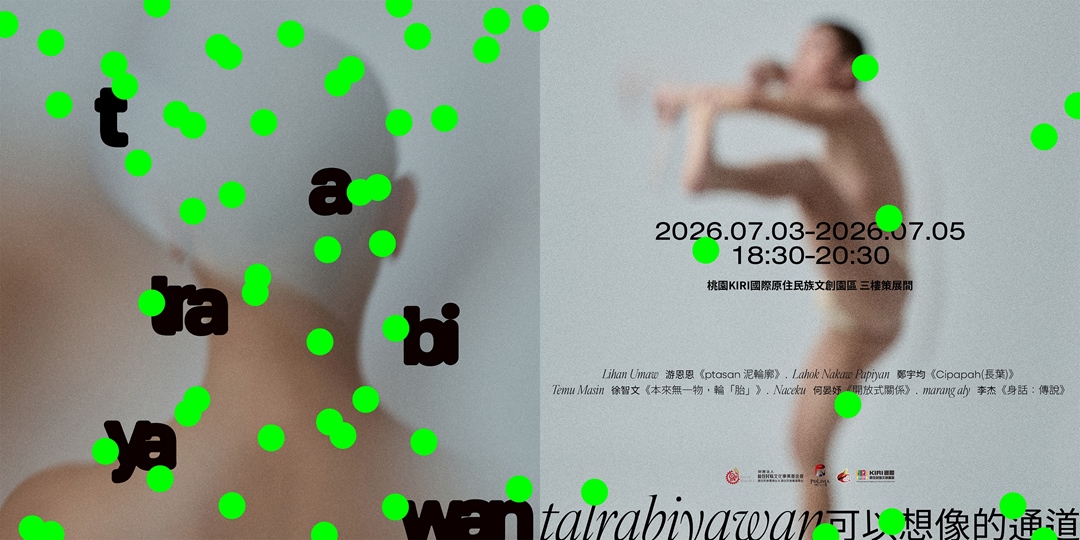

2026Pulima表演新藝站— talrabiyawan 可以想像的通道
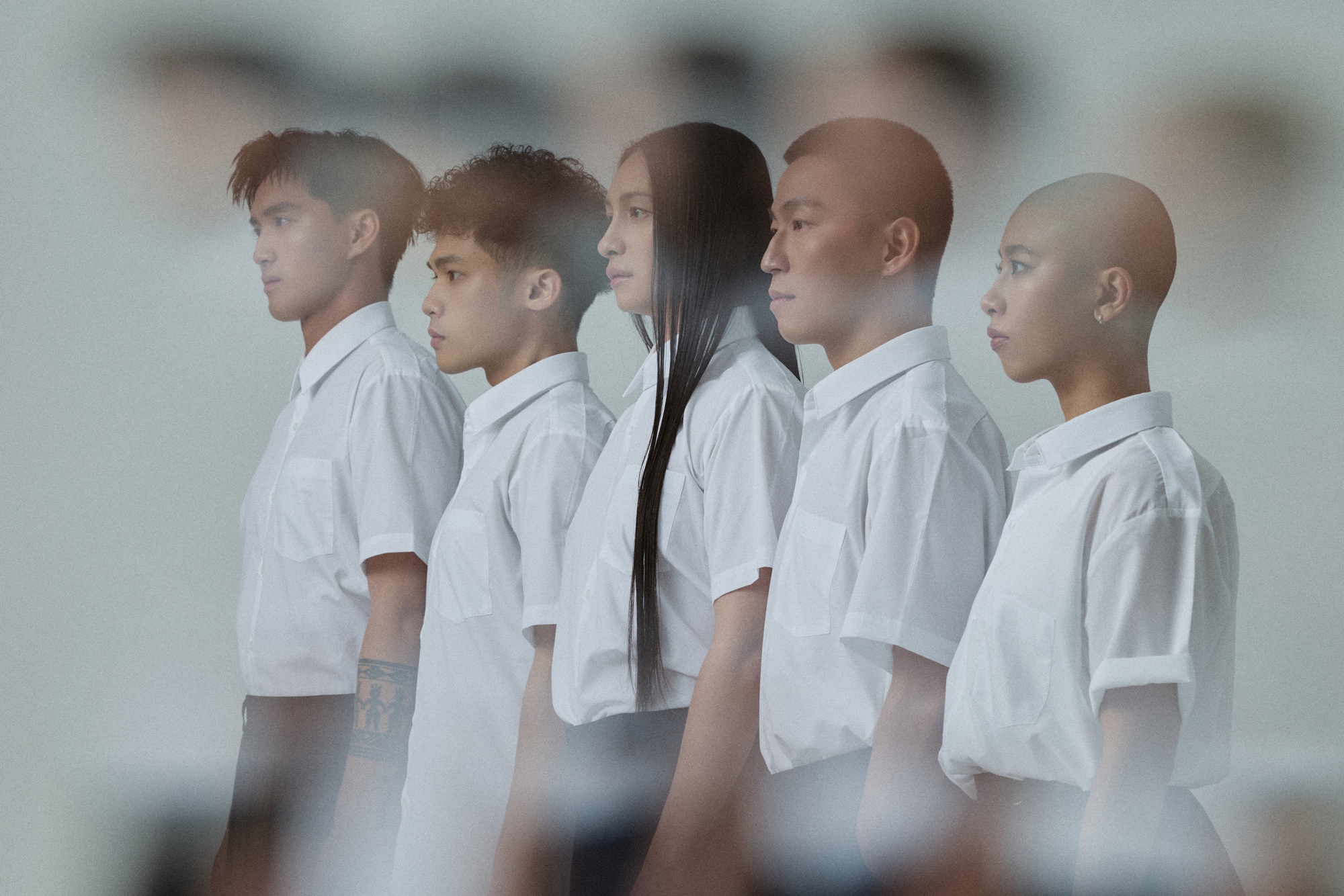
talrabiyawan 可以想像的通道
talrabiyawan 並非原本存在的詞語,而是由五位創作者各自族群語言中的詞彙拆解後重新拼裝而成。這些語言原本指涉某種與土地與勞動相關的空間,但在被重新組合之後,它不再指向單一文化或既定的場所,而成為一個新的名稱,一個仍在生成的概念。
在本次演出中,talrabiyawan 被理解為一條可以想像的通道。它像是一個途中之地,一個暫時停留與交會的空間,使不同的生命經驗得以在此相遇。人在其中短暫停留、交換感受,也在離開之後帶走新的理解。這樣的空間沒有固定形狀,它會隨著人的移動、記憶與關係而持續改變。
五位創作者Lihan Umaw 游恩恩、Lahok Nakaw Papiyan 鄭宇均、Temu Masin 徐智文、Naceku 何晏妤、marang aly 李杰,各自從不同的生命經驗出發,進入這條通道。他們的創作來自不同的文化位置、身體感知與生活背景,也在創作過程中重新理解自己與世界的關係。作品因此成為一個可以被共同搭建的場域,使個人經驗在彼此的觀看與感受之中逐漸形成新的連結。
因此,talrabiyawan 也成為本次演出的方法。舞台被想像為一個暫時生成的空間,使不同生命經驗在其中相遇。觀眾進入的不是一個完成的敘事,而是一個正在形成的場域:身體、聲音、記憶與文化在此彼此穿越,新的理解在交流之中慢慢出現。
由五段生命經驗所拼組而成的 talrabiyawan,既是一個名稱,也是一個通道。在這條通道之中,人們短暫停留,在彼此的故事之間相遇,也在相遇之中開啟新的想像。
talrabiyawan:An Imagined Passage
talrabiyawan is not an originally existing word. It is a newly assembled term, constructed by deconstructing and recombining words from the respective Indigenous languages of five artists. These original words each referred to spaces related to land and labor. However, through this process of reassembly, the term no longer points to a single culture or a fixed place. Instead, it becomes a new idea—an evolving concept that is still in the process of formation.
In this performance, talrabiyawan is understood as an imagined passage. It resembles a space in transit—a place of temporary stay and engage—where different lived experiences are able to meet. Within it, people linger briefly, exchange sensations, and depart carrying new understandings. Such a space has no fixed form; it continuously shifts in response to movement, memory, and relationships.
Five artists—Lihan Umaw, Lahok Nakaw Papiyan, Temu Masin, Naceku, and marang aly—each enter this passage from their own distinct life experiences. Their works discovered from different cultural positions, embodied perceptions, and backgrounds, while also re-examining their relationships with themselves and the world through the creative process. As a result, the works become a shared space that can be collectively constructed, where individual experiences gradually form new connections through mutual observation and perception.
Therefore, talrabiyawan also becomes the methodology of this performance. The stage is imagined as a temporarily space in which different life experiences come into encounter. What the audience enters is not a finished narrative, but an emergent space: bodies, sounds, memories, and cultures intersect and pass through one another, and new understandings gradually unfold through these exchanges.
Composed of five interwoven life experiences, talrabiyawan is both a concept and a passage. Within this passage, people stay briefly, encounter one another through their stories, and, in those encounters, open up new possibilities for imagination.
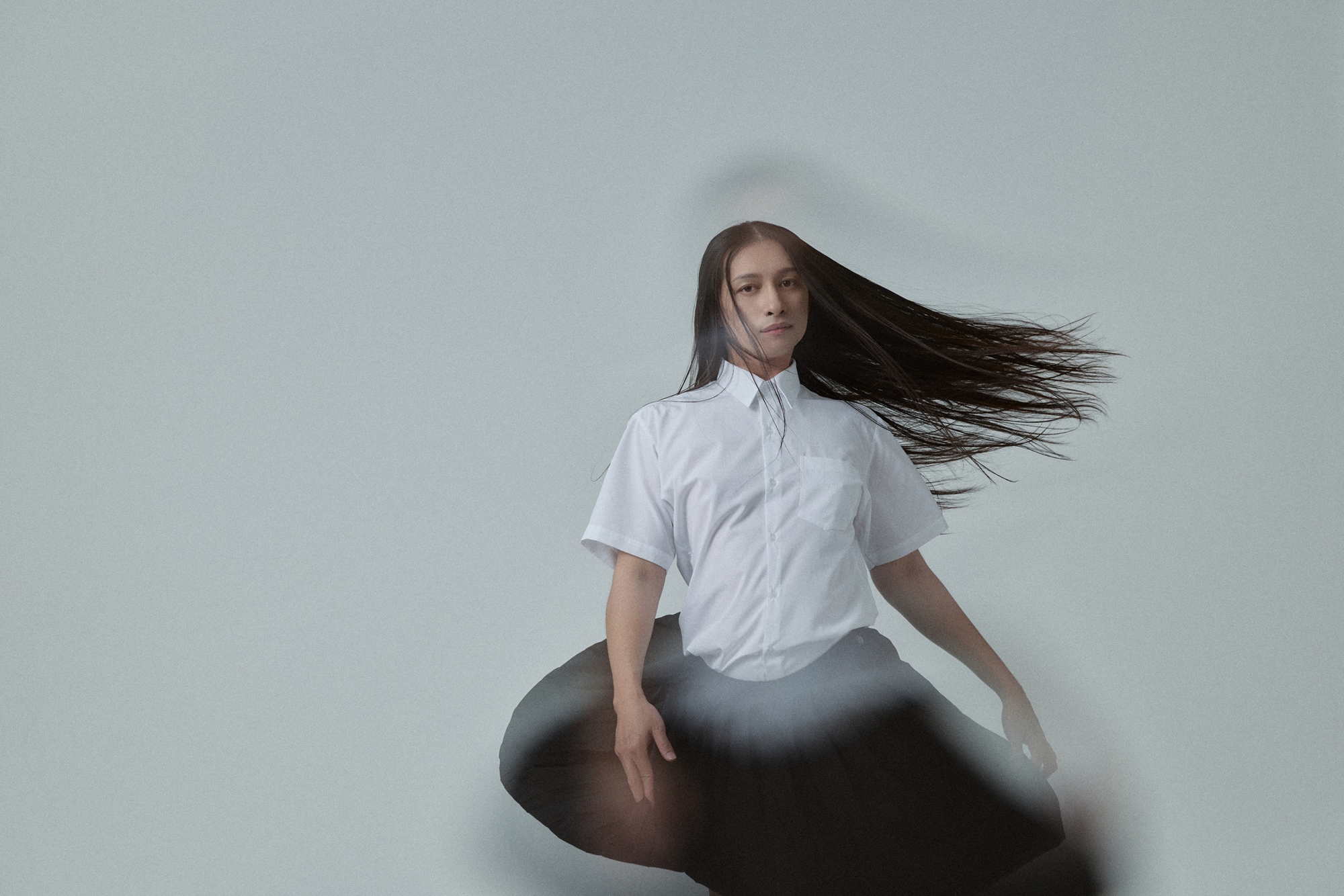
創作者介紹|Lihan Umaw 游恩恩
來自花蓮三笠山部落的太魯閣族,現居高雄,就讀於高雄師範大學跨領域研究所。成長於當代城市環境的他,透過身體創作回返族群文化,並以自身生命經驗為起點,持續探問身體、性別與文化之間的交織關係。擅長以身體作為創作媒介,熱愛表演,擁有十年變裝演出經驗。進入研究所後,其創作由舞蹈延伸至結合行為藝術的實驗形式,核心聚焦於族群與(跨)性別雙重認同交錯下的生命經驗,開展更為開放且辯證的身體敘事。
節目名稱|《ptasan泥輪廓》
「ptasan」在太魯閣族語境中意指「印記」。刻在臉上的文面,是一個人經歷試煉後取得身分、被族群承認的象徵。文面超越裝飾的層次,它把身體與歷史、族群與祖靈連在一起,成為存在於世界上的證明。《ptasan 泥輪廓》以太魯閣族的文面起源傳說為創作文本。傳說中,世界初始只有一對兄妹,為了延續族群血脈,妹妹策畫多次欺瞞與偽裝。她告訴哥哥,在山腳溪流旁,有一位臉上塗滿黑色圖紋的陌生女子正在等待。每當哥哥下山,妹妹便走向溪流,以河床黑泥塗抹自己的臉,化身成另一個「人」,讓哥哥放下禁忌與戒心,血脈就在這樣反覆的遮蔽與轉換中延續。這則傳說把偽裝與生存綁在一起,覆滿泥土的臉,承載的是讓生命繼續的方法,是在困境中誕生的身體技術。我將這個傳說與自己跨性經驗交織在一起,在現實社會裡,偽裝、修飾、通過(passing)常被視為壓力與負擔;但對我而言,那也是一套讓自己得以呼吸與行走的方式。如同傳說中的妹妹,我用身體構築一個他人得以辨識、得以靠近的樣貌,在其中換取移動、親密與存活的空間。《ptasan 泥輪廓》把這樣的經驗轉化為當代的文面實踐。我不使用刺針與染液,而是泥土、行為與身體,在臉與皮膚上描繪流動的輪廓。那些痕跡不追求單一而固定的身分,而是在傳說與現實、族群與性別之間持續變形。
我在這次的創作中提問:
像我(們)這樣的人,能否透過藝術為自己文下一種面?那個文面的暫時性會多久?而那樣的圖紋如何成為更自由自己?
Artist Introduction|Lihan Umaw
Lihan Umaw is a Truku artist from the Bgurah Branaw (Sanzhishan) community in Hualien, currently based in Kaohsiung and pursuing studies in the Graduate Institute of Transdisciplinary Art of National Kaohsiung Normal University (NKNU).Having the background of growing up in an urban environment, Lihan return to her Indigenous cultural roots through embodied artistic practice. Starting from personal life experiences, Lihan’s work continually explores the intertwined relationships between body, gender, and culture.Working primarily with the body as a creative medium, Lihan has a deep passion for performance and over ten years of experience in drag performance. Since entering graduate school, Lihan’s practice has expanded from dance into experimental forms that incorporate performance art. Her recent works focus on life experiences shaped by the intersection of Indigenous identity and (trans)gender identity, developing an open and critical narrative of the body.
Program Title |Earthen Contours
In the Truku cultural context, ptasan refers to an imprint. The facial tattoos carved onto the skin mark the moment when a person, having undergone trials, attains identity and recognition within the community.More than ornamentation, these tattoos bind the body to history, the individual to the collective, and the living to the ancestors. They become a visible proof of one’s existence in the world.ptasan: Earthen Contours draws upon the Truku origin myth of facial tattooing as its creative text. According to the tale, at the beginning of the world there existed only a brother and a sister. In order to continue the lineage of their people, the sister devised repeated acts of deception and disguise.She told her brother that near a stream at the foot of the mountain, a mysterious woman with black patterns covering her face was waiting for him. Each time the brother descended the mountain, the sister would walk to the stream and smear the dark mud from the riverbed across her face, transforming herself into another “person.” Through this disguise, the brother’s concerns and hesitation dissolved, and the lineage of their people continued through repeated acts of concealment and transformation.In this tale, disguise becomes inseparable from survival. The mud-covered face carries the knowledge of how life continues—a bodily technique born from necessity, shaped within moments of crisis.In this tale, disguise becomes inseparable from survival. A face covered in mud carries the means through which life continues—a bodily technique born out of necessity in times of hardship.I weave this story together with my own experience as a transgender. In this society, disguise, modification, and passing are often regarded as sources of pressure or burden. Yet for me, they are also ways that allow me to breathe and move through the world. Like the sister in the tale, I use my body to construct a form that others can recognize and approach—through it, I negotiate spaces for movement, intimacy, and survival.ptasan: Earthen Contours transforms this experience into a practice of tattooing. Instead of needles and ink, I use mud, actions, and the body itself to trace shifting contours across the face and skin. These marks do not pursue a single, fixed identity; rather, they continuously transform between myth and reality, between indigeneity and gender.
Through this work, I wonder:
Can people like us inscribe a face of our own through art?
How long might such a temporary tattoo remain?
And how might these patterns become a way of inhabiting ourselves more freely?
Creative & Production Team 創作/製作群
Artist 創作者|Lihan Umaw 游恩恩
Performer 表演者|Lihan Umaw 游恩恩
Guest Performer 客席演出| Tanivu 陳美花(珊珠牙工坊)、姐妹們 Tanivu Shanzhuya Workshop, and Sisters
Arts Administration 藝術行政| Umaw Kowbu 賴仲軒
Lighting Design 燈光設計|楊淳安 YANG,CHUN-AN
Stage Crew 舞台工作人員|楊宗樺 YANG,ZONG-HUA
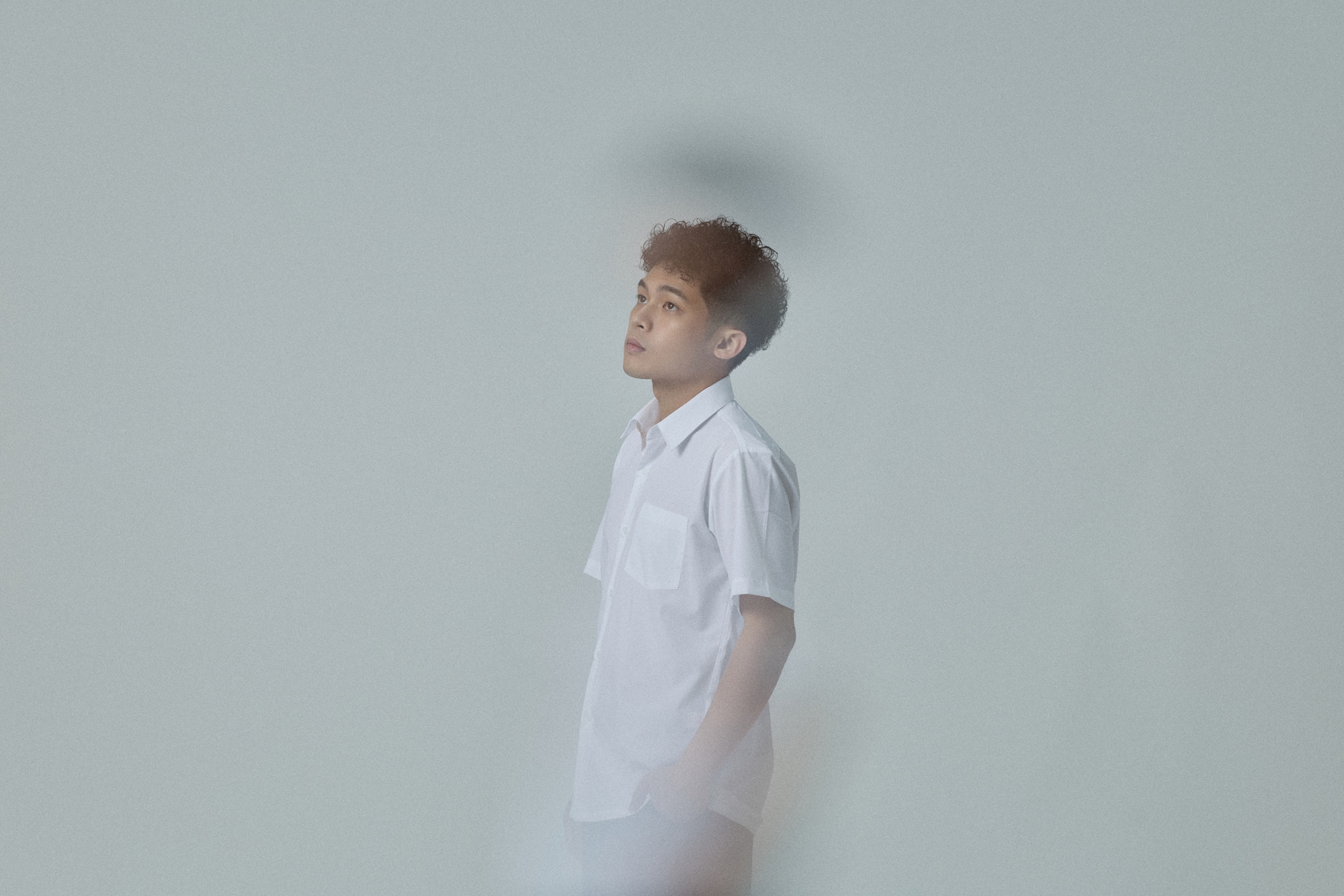
節目名稱|《Cipapah(長葉)》
「我是誰?」——20歲時,這個提問開啟了創作者的尋根之旅。自國家兩廳院 Gap Year 計畫展演《Lamit》起,到24歲創作《Cicengo’》,他逐漸確認來處,並以「文化是流動」為創作核心:無論身在何處,只要與族群和文化保持連結,認同便能生長出當代樣貌。於是,一個如樹般的計畫逐步展開:《Lamit》(尋根)、《Cicengo’》(發芽)、《Cipapah》(長葉)、《Hana》(開花)、《Heci》(結果)。文字在其中既是情感的記錄、流傳的方式,也是事實的見證。
本次呈現的《Cipapah(長葉)》承接前兩齣作品,帶著自我經歷與文化記憶,以新詩為創作手段,結合肢體、行為、影像,構築一場充滿迷幻氛圍的劇場詩篇。影像中反覆出現的「冰箱、桌子、家人」,看似日常,卻是故事的核心與起點。它們映照著家族、阿美族文化與部落的生命經驗,並在時代流轉中不斷滾動、生長,成為作品的主體。
《Cipapah》是一場試探(try out),也是一次將文字化為葉片、在劇場生長的探索。
Artist Introduction|Lahok Nakaw Papiyan
An Amis (Pangcah) theatre practitioner, Lahok Nakaw Papiyan brings experience in both artistic creation and arts administration. With a strong foundation in writing and a sharp narrative sensibility, Lahok has long explored Indigenous memory and personal experience through poetry and prose. His practice often builds a translational relationship between language and the body, allowing text to extend into action and perception. Lahok’s work focuses on the body, collective memory, and cross-disciplinary experimentation, moving between artistic practice and cultural production while continuing to explore the diverse possibilities of contemporary Indigenous performance.
Program Title |Cipapah:Growing Leaves
“Who am I?” — At the age of twenty, this question initiated the artist’s journey of searching for his roots. From presenting Lamit through the National Theater and Concert Hall’s Gap Year Program to creating Cicengo’ at the age of 24, the artist gradually came to understand where he comes from. Through this process, the idea that “culture is fluid” emerged as a core principle of his practice: wherever one may be, as long as one remains connected to their people and culture, identity can continue to grow into contemporary forms.From this realization, a tree-like creative project gradually unfolded:Lamit (rooting), Cicengo’ (sprouting), Cipapah (growing leaves), Hana (blooming), and Heci (bearing fruit). Within this process, writing becomes both a record of emotions, a means of transmission, and a testimony of lived reality.
Cipapah:Growing Leaves continues the development of the first two works. Drawing from personal experiences and cultural memory, the piece employs free verse poetry as a creative method, combining movement, performance actions, and video to construct a theatrical poem filled with a dreamlike atmosphere.Images of a refrigerator, a table, and family members repeatedly appear throughout the work. Though seemingly ordinary, they form the core and starting point of the story. These daily objects reflect family life, Amis (Pangcah) culture, and the lived experiences of the community, continuously rolling and growing through time to become the central subject of the work.
Cipapah:Growing Leaves is both a try-out and an exploration—an attempt to transform words into leaves, allowing them to grow within the space of theatre.
Creative & Production Team 創作/製作群
Director 導演|鄭宇均 Lahok Nakaw Papiyan
Performers 表演者|林承豪 Lin Cheng-Hao、Papoh Falahan
Choreography 動作指導|鄒青紜(梅子)Chou Ching-Yun
Music Design 音樂設計|古曼筠 Ku Man-Yun
節目名稱|《「本來無一物,輪『胎』」》
多年後重返故土,輪胎依舊靜靜掛著,卻伴隨著一種酸楚。家鄉已變,老屋被時間侵蝕,青苔蔓延在牆角,訴說著荒蕪與孤寂。而輪胎,像時間的標誌,一端連著童年的過去,一端懸掛在現代化的拉力之中。它頑固不朽,如同黑色礁石,見證了鄉村的空洞、城市的繁忙,以及離散的人們。它是矛盾的存在:既是童年的樂園,也是流動的象徵;既承載記憶,也暗示遺忘。
作品從這裡展開,讓輪胎成為時間的語言。舞台上,它不再只是物件,而是過去、現在與未來的交會之地。表演者觸碰、拉動、與它共舞,在動作中勾勒記憶的輪廓,打開時間的裂縫。投影映現家屋與土地的影像,呼應身體與物件的對話。
輪胎被抱起、推動、背負、放下——如同記憶與責任的重量,在遊戲與現實之間來回撕扯。最終,表演者將輪胎放下,蜷身其中,如同回到母體。此刻,輪胎化為時間的容器,安靜收納過去、現在與未來,邀請觀眾在其中找到屬於自己的故事。
Performer Introduction|Temu Masin
Born in Hbun Ping Community, Fuxing District, Taoyuan, and currently based in Hualien, Temu graduated from the Department of Social Work at Tzu Chi University and now works as a beautician at Korean Sauna Han Steam. His long-term interests engage with themes of gender, war, identity, social structures, and group dynamics. Living within a turbulent and rapidly shifting generation, he searches for readable “texts” between artistic practice and daily life. Through collective portraits and shared experiences, his work seeks to establish tangible connections and moments of joy within daily existence.In terms of artistic language, Temu approaches poetry as a medium between dream and reality, distilling consciousness into images and conceptual forms while exploring aesthetic insights emerging from the collective unconscious. By observing unresolved states and unanswered mysteries, he experiments with combinations of numbers and symbols to build an index connecting all things, constructing a distinctive poetic field.Since his student years, he’s actively engaged in creative practice and public presentations. In 2014, he participated in the cultural event “nganga-mlikuy: Mountain Indigenous Gathering.” In 2020, his poem Sepi: Dream received First Prize in the Social Category of the 2nd Vusam Literary Award. In 2021, he was awarded a Literary Creation Grant from the National Culture and Arts Foundation, completing the work From Nothing to Zero. In 2023, they presented the performance work ○ at the Datong Living Aesthetics Center in Yilan. In 2024, he presented Atopic Dermatitis in the opening performance of the Pulima Arts Festival. In the same year, he received a fiction grant from the Indigenous Peoples Cultural Foundation, extending his literary practice through the project When the Sky Suddenly Roars, and exhibited the work When I Return Toward Your Silence in the exhibition “multi-vision.”
Some memories cannot be worn away, like the tire hanging from a tree. Handmade by my father 27 years ago, it still hangs from a branch in the mountains, once swinging with the laughter and carefree days of children. In those days, the sky seemed higher and time moved more slowly, and even the smallest moments of life carried their own weight. The tire was not only a toy for play, but also the imprint of the father’s hands and the gentle curve of my family warmth.Years later, upon returning to the homeland, the tire still hangs quietly in its place, now accompanied by a quiet ache. The hometown has changed. The old house has been worn by time, moss spreading along the corners of its walls, speaking of desolation and solitude. The tire, like a marker of time, holds one end tied to childhood memories while the other hangs within the pull of modernity. Stubborn and enduring like a dark reef, it witnesses the emptiness of the countryside, the rush of the city, and the scattering of people. It is a paradoxical presence: both a playground of childhood and a symbol of movement; both a vessel of memory and a suggestion of forgetting.
From here, the work unfolds, allowing the tire to become a language of time. On stage, it is no longer merely an object, but a site where past, present, and future converge. The performer touches it, pulls it, and dances with it, tracing the contours of memory through movement and opening fissures in time. Projected images of the house and the land appear, echoing the dialogue between body and object.
The tire is lifted, pushed, carried, and set down—like the weight of memory and responsibility, pulled back and forth between play and reality. In the end, the performer places the tire down and curls inside it, as if returning to the womb. In that moment, the tire becomes a vessel of time, quietly holding the past, present, and future, inviting the audience to discover their own stories within it.
Creative & Production Team 創作/製作群
Director and Performer 編導創作 / 表演者| 徐智文 Temu Masin
Music creator and Live Sound Artist 音樂創作 / 現場聲響藝術家| 徐智文 Temu Masin
Atayal language recording 泰雅族語錄製|徐紅娟女士 Ms. Xu Hong-juan
Rehearsal Assistant 排練助理|李偉雄 Li Wei-xiong
創作作品《在哪裡的蝸牛》展演於2025 出櫃藝術節、2025 Pulima藝術節、2025 草草戲劇節,受邀於 2024 Toronto Taipei Interlink 開放工作室呈現,入選 2023 Pulima藝術獎表演創作徵件競賽;《開放式關係》獲得 2025 Pulima藝術獎表演創作徵件優選獎;《其他日常》則於 2024 女子馬戲平台展演。曾以表演者身份參與里昂舞蹈雙年展、臺北藝術節、臺北詩歌節、「舞蹈南方」嘉義駐地國際交流雙週等演出,並獲選為2025 Perth Moves國際舞蹈工作坊臺灣端參與藝術家。他持續在行動與創作中凝視身體的邊界,並以創作作為介入社會與文化的方式,回應當代的在場與未竟。
開放式關係的核心,在於突破單一伴侶框架的情感實踐。本次創作以多重伴侶關係為概念起點,關注在建立關係的過程中,如何抵達知情同意、尊重、責任與規則共識。透過這樣的實踐經驗,創作者得以看見自身情感的流動、界線的劃定,以及主體樣貌的逐步形成。這樣的關係實踐與探索,進一步延伸至文化身份的思考。身為在都市長大、長期受漢文化養成的卑南族個體,近年重新接觸並學習自身文化時,創作者深刻感受到兩種世界觀的差異,也意識到殖民與墾殖的視角如何透過凝視、分類與標籤,建構了社會對原住民族的理解與想像。這些外在目光深深影響了自我觀看的方式,使其落入自我殖民的陷阱,並在不同族群與社會場域中,因環境而產生身份的變形、模糊與游移。這樣的經驗反映了社會結構如何形塑我們的自我認識,也影響我們理解他人的方式。於是,在創作中,創作者嘗試從身體出發,回應並鬆動內在所承載的文化與社會刻板印象。在多元、異質與變動的狀態中,尋找一種自我解殖的主體敘事。
作品以「土地宣言」行動的意識為主軸,創作者以展現多重身份、文化與性別的服裝符號包覆身體,透過混種的肢體語彙與動能,在身體與符號之間的抵抗與協商中褪去身份被定義的限制,回應並跳脫社會投射與想像;同時拒絕被觀看所定義,使文化符號不再僅止於可辨識的形象,而是在斷裂與擾動中生成新的身體語言。透過讓觀看失效,進一步堆疊出原住民族群與土地長久連結的回響,揭露墾殖敘事下對原住民族影響的未竟揭示,並將這樣的回應擴展至社會層面,開啟「土地宣言」在台灣發生的可能。
Performer Introduction|Naceku
Naceku is a performance artist of Pinuyumayan and Taiwanese Han descent. Graduated from the Department of Dance at the University of Taipei. Naceku’s artistic practice is nourished by embodied experience, examining the sensory and resistant experiences that emerge from intersecting identities. They focus on how Indigenous culture, queer narratives, and non-binary gender identities are perceived, challenged, and reimagined within Taiwanese society nowadays. Through contemporary dance language and corporeal inquiry, Naceku continuously engages with the complexities of being both Indigenous and Taiwanese Han, while also exploring the expressive potential and emotional intensity of non-binary embodiment. Their work aims to construct an open mode of storytelling, where identity is not a fixed frame but a force of fluidity, transformation, and connection.
The work Where Are The Snails was presented at the 2025 Come Out Festival, 2025 Pulima Arts Festival, and 2025 Grasstraw Festival. It was also invited for presentation at the 2024 Toronto–Taipei Interlink Open Studio, and was selected for the 2023 Pulima Art Award – Performance Creation Open Call.Another work, Polyamory, received the Excellence Award in the 2025 Pulima Art Award – Performance Creation Open Call, while Other was presented at the Women Circus Platform.As a performer, the artist have also participated in productions and festivals including the Biennale de la Danse de Lyon, Taipei Arts Festival, Taipei Poetry Festival, and the international residency exchange “Dance South” Chiayi Residency Program. In 2025, they were selected as a Taiwanese participating artist in the Perth Moves International Dance Workshop.Through both action and creation, they continue to examine the boundaries of the body, using artistic practice as a means to intervene in social and cultural contexts while responding to the unfinished conditions of the present.
Program Title| Polyamory
At its core, an open relationship is an emotional practice that moves beyond the framework of monogamy. This work takes polyamorous relationships as its conceptual point of departure, focusing on how mutual consent, respect, responsibility, and shared agreements can be reached in the process of building relationships.Through these lived experiences, the creator reflects on the fluidity of emotions, the negotiation of boundaries, and the gradual formation of one’s sense of self.This practice and exploration of relationships further extends into reflections on cultural identity. As a Pinuyumayan individual who grew up in an urban environment and was largely shaped by Han culture, the creator, upon reconnecting with and relearning their own cultural heritage in recent years, has come to deeply sense the differences between these two worldviews.Through this process, they have also become aware of how colonial and reclamation perspectives—operating through acts of gazing, classification, and labeling—have constructed society’s understanding and imagination of Indigenous peoples. These external gazes profoundly influence the way one sees oneself, often leading to a form of self-colonization. Within different ethnic and social contexts, identity may transform, blur, or transform in response to the surrounding environment.Such experiences reveal how social structures shape our sense of self and, in turn, influence the ways we come to understand others.In response, the creator turns to the body as a point of departure, attempting through artistic practice to respond to and loosen the cultural and social stereotypes embedded within. Within a condition that is plural, heterogeneous, and constantly shifting, the work seeks to articulate a subjectivity grounded in self-decolonization.
The work takes the consciousness of a land acknowledgement as its central core. The performer envelops their body with costume symbols that embody multiple identities, cultures, and genders. Through hybrid, chaos-like physical vocabularies and kinetic forces, the body negotiates and resists the symbolic structures imposed upon it, shedding the constraints of predefined identities and responding to — while simultaneously escaping from — social projections and imaginations.At the same time, the work refuses to be defined by the act of being seen. Cultural symbols are no longer presented merely as recognizable images; instead, they generate new bodily languages through rupture and disruption. By rendering the act of viewing unstable, the performance accumulates resonances of the enduring relationship between Indigenous peoples and the land. It reveals the yet-unresolved impacts of settler-colonial narratives on Indigenous communities and extends this response toward the broader social sphere, opening up the possibility for the practice of land acknowledgement to emerge within the Taiwanese context.
Creative & Production Team 創作/製作群
Director / Choreographer / Performer 編導創作/表演者|何晏妤 Naceku
Rehearsal Assistant 排練協力|林慧盈Winnie
Sound Design 聲響設計|賴魯犇Ruben Rübe
Production Assistant 製作助理|陳俞臻Chen, Yu-Chen
神話傳說是人類群體共同的文化核心。它們常以創世起源、神祇英雄、自然力量或超自然事件為主題,藉此解釋文化的發源、社會的秩序、群體的價值觀與自然現象。當以族群語言述說時,更能深刻展現文化的集體意念,包含歷史脈絡、宗教信仰、文學哲學,同時承載教育、警示與娛樂的功能。人類需要神話故事,因它蘊含深遠的意義與智慧,成為探索族群思想與歷史回望的重要途徑。
在臺灣原住民族的傳統中,神話的流傳方式多以「口傳」為主。透過故事,人們能感受群體發展的脈動,並領會先人留下的教誨與提醒。本次創作以《身話:傳說》為題,將「身體」視為另一種說故事的方式——它是一種對話的語彙,也是表演最常見的現身手段。藉由身體、聲音、舞蹈與情緒的表達,讓神話得以在當代以「傳」與「說」的形式重新被訴說。
題名中的符號「:」既象徵族語發音中的長音,帶有強調與連結的意味,也隱喻著文化時空與故事傳續之間的重要橋樑。演出中,兩位表演者分別扮演「說」與「身」:一位以口傳的方式述說族群的神話故事,另一位則以身體回應敘事內容。兩種表達形式相互交錯、切換與對話,於空間中時而分離、時而交融,讓「身體的話語」成為連結口傳神話的當代詮釋。
Performer Introduction|marang aly
An pangcah (amis) from the tafalong community, born and raised in Yilan. With a mother who is a cultural worker, marang was immersed from an early age in cultural contexts such as ilisin (the ritual of tribe), cultivating a deep emotional connection and sense of responsibility for his Indigenous heritage. He graduated from the Indigenous Performance and Arts at National Dong Hwa University, and currently work as an arts administrator at Langasan Theatre, as well as the initiator of the ilalan experimental fields.His creative practice spans the body, theatre, video, and curatorial work. His works often begin from the multiplicity and translatability of language, drawing on cultural symbolism, ritual spaces, and both personal and collective contemporary experiences. Through this approach, marang seeks to explore the contemporary conditions of Indigenous identity and broader social phenomena within the interstices of hybrid subjectivities.
Program Title| Body Tales : Myth Tells
Tales and Myths are a shared cultural core of human communities. They often center on themes such as creation origins, deities and heroes, natural forces, or supernatural events, through which cultures explain their beginnings, social orders, collective values, and natural phenomena. When narrated in Indigenous languages, they further reveal the collective consciousness of a culture, encompassing historical contexts, religious beliefs, literary philosophy, and at the same time carrying functions of education, warning, and entertainment. Human societies need mythic stories, for they contain profound meanings and wisdom, serving as important pathways to explore a people’s worldview and to reflect upon their histories.
Within the traditions of Indigenous peoples in Taiwan, tales are primarily transmitted through storytelling. Through stories, people can sense the rhythms of collective development and understand the teachings and reminders left by their ancestors. This work, titled 《Body Tales : Myth Tells》, regards the body as another way of storytelling — a vocabulary of dialogue and one of the most common modes of presence in performance. Through the expression of body, voice, dance, and emotion, tales are retold in the contemporary moment through the forms of “passing on” pass and “telling” speak.
The symbol “:” in the title signifies the elongated sound often found in Indigenous language pronunciation, suggesting emphasis and connection, while also metaphorically representing a bridge between cultural time, space, and the continuation of stories. In the performance, two performers respectively embody “speak” and “body”: one recounts Indigenous mythic stories through oral narration, while the other responds through bodily expression. These two modes of expression intersect, shift, and converse with each other, sometimes separating and sometimes merging within the space, allowing the “language of the body” to become a contemporary interpretation that connects with oral tale traditions.
Creative & Production Team 創作/製作群
Artist 創作者|marnag aly 李杰
Performer 表演者|marnag aly 李杰、maya' a taboeh hayawan 羅媛
Sound & Music Producer 音樂製作|杜彥鵬 Pupunu
Costume Designer 服裝設計|阮原閩 Siyat Moses
\ 演出資訊 \
- 時間| 7/3(星期五)、7/4(星期六)、7/5(星期日) 18:30-20:30
- 地點| KIRI 國際原住民族文創園區 3樓策展間 (桃園市大園區大成路二段100號)
\ Performance Information \
- Dates & Time|July 3 (Fri), July 4 (Sat), July 5 (Sun) | 18:30–20:30
- Venue|KIRI International Indigenous Cultural and Creative Park, 3F Exhibition Hall
\ 觀眾注意事項 \
- KIRI 國際原住民族文創園區,可搭乘臺灣高鐵至桃園站下車後,轉乘機場捷運(往臺北車站方向)至桃園捷運 A17 領航站,出站後往右前方步行約 3 分鐘即可抵達;亦可直接搭乘機場捷運至 A17 領航站。
- 本次演出時間為 7月3日(星期五)、7/4(星期六)、7月5日(星期日),入場時段為18:00–18:30,請準時入場。
- 建議觀賞年齡為 7歲以上。
- 為避免遲到導致無法入場,建議您提早出發,預留交通與等候時間(提醒臺北南下路段易塞車)。
- 本演出形式需隨表演進行移動,入場後請依照現場表演者的引導前往各演出區域,並留意動線與觀賞距離,以確保觀演安全與體驗品質。
- 如於現場感到身體不適,請立即聯繫工作人員,我們將協助您依指示離場。
- 演出現場無設置固定座位,觀眾可站立或席地而坐。若您有特殊需求,請於入場前主動告知服務人員。
\ Audience Information \
- KIRI International Indigenous Cultural and Creative Park can be reached by taking the Taiwan High Speed Rail to Taoyuan Station, then transferring to the Airport MRT (towards Taipei Main Station) and getting off at A17 Linghang Station. From Exit, walk approximately 3 minutes forward to the right. You may also take the Airport MRT directly to A17 Linghang Station.
- Performance dates are July 3 (Fri), July 4 (Sat), and July 5 (Sun). Admission time is from 18:00 to 18:30. Please arrive on time.
- Recommended for ages 7 and above.
- To avoid being denied entry due to late arrival, please depart early and allow sufficient time for transportation and waiting (note that southbound traffic from Taipei may be congested).
- This performance requires audience movement. After entering, please follow the guidance of the performers to different performance areas, and be mindful of circulation routes and viewing distance to ensure safety and quality of experience.
- If you feel unwell during the performance, please inform staff immediately. Assistance will be provided according to instructions.
- There is no fixed seating at the venue. Audience members may stand or sit on the floor. If you have special needs, please inform the staff before entering.
\ Production Team 製作團隊 \
Cast & Crew 演職人員|Lihan Umaw 游恩恩、Lahok Nakaw Papiyan 鄭宇均、Temu Masin 徐智文、Naceku 何晏妤、marang aly 李杰、maya’ a taboeh hayawan 羅媛、Papoh Falahan、林承豪 Lin Cheng-Hao
Dramaturgy Crew 戲劇構作群|Ihot Sinlay Cihek、Watan Tusi、王廷瑋 Qaisu、周伶芝 Chow Ling-Chih、郭亮廷 Kuo Liang-Ting
Technical Coordination & Execution 技術統籌/執行|混將有限公司 Blend,.Co.
Lead Visual Designer 主視覺統籌|五八五八工作室 5858WORKROOM
Artistic Director 藝術指導|58kg
Graphic Designer 平面設計|58kg
Photographer 攝影|58kg
Photography Assistant 攝助|山大王 Alejandro Wang
Makeup Artist 化妝|鍾其甫 Chi Fu Chung
Hair Stylist 髮型|李麗貞 dodo ivy
Video Director 影像統籌|散景影像製作公司 BOKEH STUDIO
Director 導演|陳彥成 Chen Yen Cheng、陳琮皓 Chen Tsung Hao
Cinematography 攝影|翁悅 Yeah Weng
Cinematography Assistant 攝助|簡嘉君 Jia-Jyun,Jian
Lightning 燈光|翁悅 Yeah Weng
Executive Producer 總監製|阿路一‧賈佳法子 Alui‧Djadjavac
Co-Producer 協同監製|曾瓊慧 Lovenose
Producer 製作人|米利安‧巴祈睿爾 Milingan Batjezuwa
Production Assistant 製作協力|Piling Itey、林韋翔 Wei Hsiang Lin、林宜萱 Dongi‧Micyan、陳惠君 Saljeljing Yaluwan
Organizer 主辦單位|財團法人原住民族文化事業基金會 Indigenous Peoples Cultural Foundation
Co -Organizer 協辦單位|桃園市政府原民局 Taoyuan City Department of Indigenous Affairs、KIRI 國際原住民族文創園區 KIRI International Indigenous Cultural and Creative Park