
【參觀資訊】
週二至週日10:30 - 17:30,週一休館
團體導覽預約:https://forms.gle/iHWksu9EWnPMbW379
【展覽活動】
開幕活動:2026.03.07(六) 14:30
藝術家座談:2026.04.18(六) 14:00
地點:鳳甲美術館二展區
【展覽介紹】
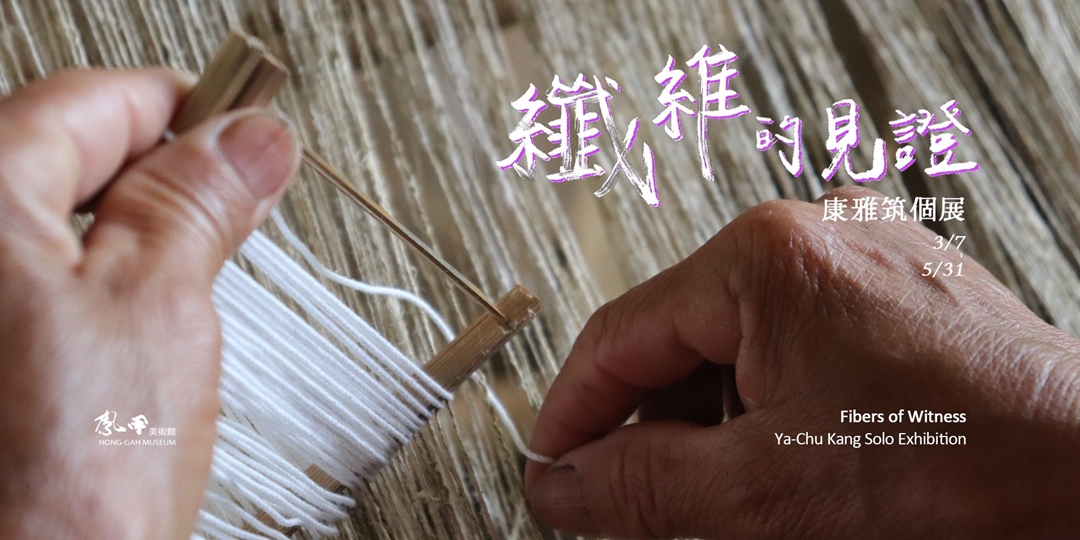
鳳甲美術館很榮幸於開春第一檔展覽,呈現藝術家康雅筑集結近年研究麻類纖維的成果展《纖維的見證》。康雅筑交織跨越洲際與世紀的材料與歷史,透過苧麻、漢麻和亞麻彼此交錯的敘事,勾勒出一條地理上從亞洲副熱帶到歐洲溫帶、歷史上跨越不同時代貿易路線的文化交流。在此脈絡下,纖維成為生態條件、文化記憶和生命循環的載體。本次展出作品分別完成於台灣、泰國和歐陸法國之間,揭示了植物如何在貿易、帝國和信念中流動往復,留下遷徙、適應和轉變的痕跡。
本計畫於2021年至2025年以多個篇章逐步開展,藝術家首先於台灣東岸研究苧麻如何運用在阿美族原住民的紡織傳統,既承載祖靈知識,也見證日本殖民統治與現代化所留下的歷史痕跡。隨後旅程延伸至泰國北部,在這裡漢麻根植於蒙族(Hmong People,又譯苗族)文化實踐之中,藉由捻線和編織技藝,將身分、社群、療癒與精神性緊密相連。最終,創作研究的發展來到歐洲的亞麻,透過束腰的歷史喚起關於社會景觀和身體政治的對話。
苧麻、漢麻和亞麻同屬韌皮纖維植物,其纖維運用也共享一套相似的製作流程,從分離(剝取麻皮)、漚麻(以水浸之,利用微生物發酵分解麻桿中的膠質,使纖維與木質部份分離)、捶打、績捻和輪紡等動作,成為時間和轉化的隱喻,凸顯身體勞動和材料之間的密切關聯。早在工業化棉花成為主導之前,這些纖維曾是前殖民時期與近代紡織經濟的核心,它們沿著貿易路線與帝國疆界流動,透過課稅、禁令與管制而被政治化,並在工業取代過程中逐漸被邊緣化,並累積了層層疊疊的物質歷史。
在本次個展,康雅筑運用美術館廊道細長的空間,將主題媒材透過不同的植物特性、纖維屬性和創作形態逐步展開,伴隨著材料的邏輯,植物、纖維、身體和歷史在這條通道中持續地流動。在這裡,纖維轉化為一種無聲卻持恆的見證者,保存著氣候、勞動與觸感的記憶,同時呈現出個體的生存和社會的體系。
【Visit Information】
10:30-17:30 Tuesday to Sunday. Closed on Monday.
For Guided Tour Service: https://forms.gle/iHWksu9EWnPMbW379
【Exhibition Event】
Opening Reception: 7th March 2:30pm
Artist Talk: 14th April 2pm
Venue: Hong-Gah Museum Second Gallery
【Exhibition introduction】
Hong-Gah Museum is pleased to present Fibers of Witness, a solo exhibition by artist Ya-Chu Kang, bringing together her recent research on bast fibers. Through ramie, hemp, and flax, Kang weaves together materials and histories that cross continents and centuries. These fibers form intertwined narratives that trace cultural exchanges along historical trade routes, stretching geographically from subtropical Asia to temperate Europe. Within this context, fiber becomes a carrier of ecological conditions, cultural memory, and cycles of life. The works in this exhibition were developed across Taiwan, Thailand, and France, revealing how plants move through systems of trade, empire, and belief, leaving behind traces of migration, adaptation, and transformation.
This long-term project unfolded in multiple phases between 2021 and 2025. It began on Taiwan’s east coast, where Kang studied the use of ramie in the textile traditions of the Amis people—practices that carry ancestral knowledge while also bearing the marks of Japanese colonial rule and modernization. Her journey then extended to northern Thailand, where hemp is deeply rooted in the cultural practices of the Hmong people. Through spinning and weaving, fiber becomes closely tied to identity, community, healing, and spirituality. The final phase of the research turned to flax in Europe, where the history of corsetry opens up conversations around social structures and the politics of the body.
Ramie, hemp, and flax all belong to the category of bast fiber plants, and their processing follows similar steps: stripping the bark, retting (soaking the stalks in water to allow microorganisms to break down binding substances), beating, twisting, and spinning. These repetitive actions serve as metaphors for time and transformation, highlighting the close relationship between bodily labor and material. Before industrialized cotton became dominant, these fibers were central to pre-colonial and early modern textile economies. They circulated along trade routes and imperial borders, became politicized through taxation, bans, and regulation, and were gradually marginalized through industrial replacement, accumulating layered material histories.
In this exhibition, Kang responds to the museum space by unfolding her materials step by step, guided by the characteristics of different plants, fiber qualities, and forms of making. Along this passage, plants, fibers, bodies, and histories remain in constant movement. Here, fiber becomes a quiet yet enduring witness, preserving memories of climate, labor, and touch, while also reflecting both individual survival and broader social systems.