

甚麼是Descriptive Writing?
英文寫作基本上可分為這四種常見的文體:(1) expository 說明文 (2) descriptive描寫文 (3) persuasive 議論文 (4) narrative 記敘文 。
而Descriptive Writing這敘述寫作方式,是很最常見的寫作技巧,也是國外大學經常出現的課堂作業之一。描述的主題可能是人、事、物、地點、一個感覺、一段時間、一個情境,目標是創造一種生動的閱讀體驗。包含描述寫作的論文,通常涉及五種感官: Taste味覺、Touch觸覺、Smell嗅覺、Hearing聽覺,和Sight視覺。利用具體的名詞或形容詞、一些比喻類比的形象化詞語,有條理地描述動作、想法、感情、人、事、物,讓讀者身歷其境,在閱讀的同時腦中自動營造出生動的畫面,這就是一篇好的描述文。
Why is Descriptive Writing So Important? 所以描述寫作技巧的重要性是甚麼?
- 描述文是最常見的文體。
- 國外大學最常出現的課堂作業。
- 描述寫作技巧不只可以運用在描述文體上,也可以應用在其他所有類型文體。例如Narrative Essays 記敘文,透過講故事的方式帶出一個觀點,講故事就需要描述寫作的技巧;又或是Persuasive Essays 議論文,需要提出一個論點來說服讀者,描述寫作的技巧,能幫助生動地闡述論點,讓讀者可以理解並想像這個論點或是效果,更能說服讀者。
- 良好的描述技巧,能讓讀者清楚理解你的想法,形成情感上的連結,進而被影響、說服。
- 描述寫作方式是所有文體的基礎,練習描述寫作技巧,可以提升整體寫作能力。
2023/2024 Descriptive Writing Winter Intensive Course 英文敘事寫作寒假密集班課程
Date and Time 日期與時間
Dec. 18, 2023 to Feb. 7, 2024 2023年12月18日~2024年2月7日
Details 課程內容:
10 Classes per session, 3 hrs per class 每期十堂課、每堂課三小時
Sample Curriculum 參考課綱範例
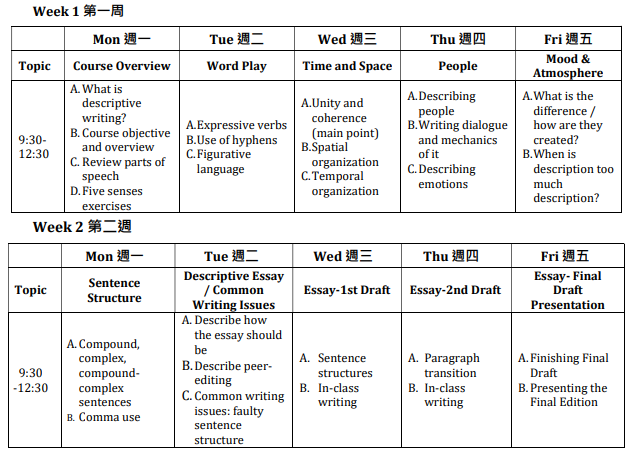
Tuition 費用
Per 2 Weeks NTD 30,000/每兩周 (會開立發票)
Need more info? 需要更多資訊,歡迎與我們聯繫
- Call 886-2-27716002
- Email info@trinityscholar.com
- Line: (@TrinityScholar)
Descriptive Writing, a skill not only for academic pursuit but also life beyond classroom.
While the other writing skills – persuasive writing, argumentative writing, and analytical writing are also essential in specific contexts, descriptive writing forms the foundation for other types of writing. It involves the use of vivid and detailed language to create a clear picture or description of a person, place, object, event, or experience that leaves a lasting impact on the reader.
At high school level, from academic assignments, public speech, to college application or creative pursuits, descriptive writing skills play a vital role in communication, critical thinking, and overall personal development. By enriching students’ effectiveness in communication skills, both written and verbal, later in life, these skills also help students become a more effective storyteller, and foster creativity and empathy, bringing success in higher education and future careers.
TrinityScholar's descriptive writing course guide students to fosters creativity, critical thinking, and effective communication, while also deepening their appreciation for the written word and the power of language. This fundamental skill serves students well not only in their academic pursuits but also in various aspects of life beyond the classroom, a powerful tool for effective communication, creative expression, and personal growth.
Examples of Usages of Descriptive Writing at High School Level
- Academic Writing: Descriptive writing is essential for various academic assignments, such as essays, reports, and research papers. Whether analyzing a literary text, describing historical events, or explaining scientific concepts, students can use descriptive language to enhance their arguments and make their writing more engaging.
- College Applications: When applying to colleges, students often need to write personal statements or essays. Descriptive writing can help them effectively convey their unique experiences, interests, and aspirations, making their application stand out to admission officers.
- Creative Writing Competitions: Many high schools host creative writing competitions, where students can showcase their descriptive writing talents through short stories, poems, or creative essays. Participating in such competitions can foster their passion for writing and earn recognition for their skills.
- Public Speaking and Debates: Descriptive writing can also benefit students in public speaking engagements and debates. Being able to use descriptive language effectively can make their speeches more persuasive, engaging, and impactful.
- Literary Analysis: When studying literature, students are often required to analyze and interpret descriptive passages from books or poems. Strong descriptive writing skills enable them to grasp the nuances of the author's language and imagery, enhancing their comprehension and analysis.
- Journalism and School Publications: Students interested in journalism can use descriptive writing to craft compelling articles and feature stories for school newspapers or magazines. Descriptive language can bring events, interviews, and profiles to life for their readers.
- Creative Projects: In various subjects, students may be tasked with creative projects. Whether designing a poster, constructing a diorama, or presenting a historical event, descriptive writing can be used to provide context, explanations, and artistic elements to their projects.
- Book Reviews and Recommendations: Students can use descriptive writing to share their thoughts and opinions about books they've read. Crafting detailed book reviews or recommendations can help their peers discover new reads and appreciate literature.
- Personal Reflections and Journals: Descriptive writing is a powerful tool for personal reflections and journaling. Students can use this skill to express their thoughts, emotions, and experiences, helping them to develop self-awareness and emotional intelligence.
- Language Learning: For students learning a foreign language, descriptive writing can aid in expanding vocabulary and improving language proficiency. Describing scenes, people, and experiences in the target language reinforces language skills and cultural understanding.
Advantages Descriptive Writing Academically and Professionally
- Academic and professional advantages: In academic settings, well-developed descriptive writing can lead to better grades as it demonstrates your ability to articulate ideas clearly and concisely. In professional environments, it can enhance your communication skills and improve your chances of success in various fields.
- Persuasion and influence: In persuasive writing, descriptive language can be a potent tool. By painting a vivid picture of the benefits or consequences of a particular idea, product, or action, you can sway readers to your point of view.
- Imagination and creativity: Descriptive writing encourages creative thinking and the use of imagination. It allows you to explore and express ideas beyond the ordinary, leading to innovative and unique pieces of writing.
- Empathy and understanding: By describing different situations, cultures, or perspectives, you can foster empathy and understanding in your readers. It enables them to put themselves in the shoes of others and see the world from different angles.
- Artistic expression: For those interested in creative pursuits, descriptive writing provides a valuable means of artistic expression. It allows writers to showcase their unique voice and style, leading to a more diverse literary landscape.
- Enjoyment of literature: Being adept at descriptive writing enhances your appreciation of literature. When you can analyze and understand the descriptive elements in the works of others, you gain a deeper understanding and enjoyment of literary masterpieces.