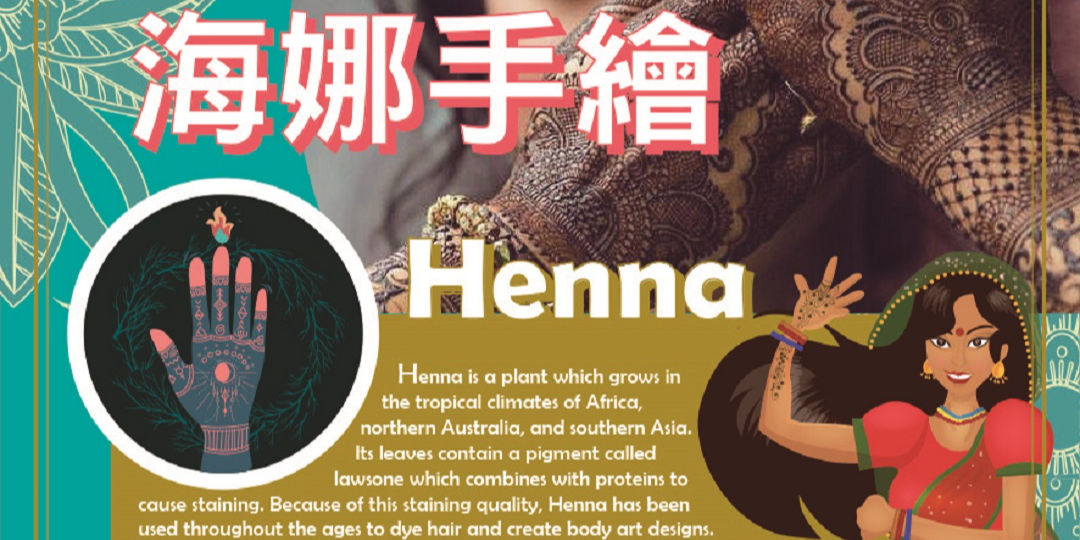

最早出現使用 Henna 是在埃及,時間點更是早在距今五千年前:用途也不單是身體彩繪,從書寫的染料到皮革布料的染劑都有,甚至還有作為藥草的醫療用途。爾後Henna興盛於北非、中東與印度有著神聖的儀式及祝福的重要地位,印度人在重要慶典或結婚前都會在脖子、四肢以及臉頰用Henna勾勒出圖騰,表達自己的願望和喜悅。
Henna畫在人體的皮膚上,需要十分鐘~半小時左右,讓顏料變乾才能順利將圖素留住。這樣的圖騰刺青,大約可維持四到十天不等,依據每個人的代謝能力快慢,以及顏料的調製濃度而有所不同。
Henna is a plant which grows in the tropical climates of Africa, northern Australia, and southern Asia. Its leaves contain a pigment called lawsone which combines with proteins to cause staining.
Because of this staining quality, Henna has been used throughout the ages to dye hair and create body art designs. and serenity.
The use of Henna for body art is several centuries old at least.
The people of ancient Egypt and India used this form of temporary tattoo for religious ceremonies, wedding festivals, and for simple body adornment.